
Addicted to YouTube or TikTok Tarot Videos? You're Not Alone
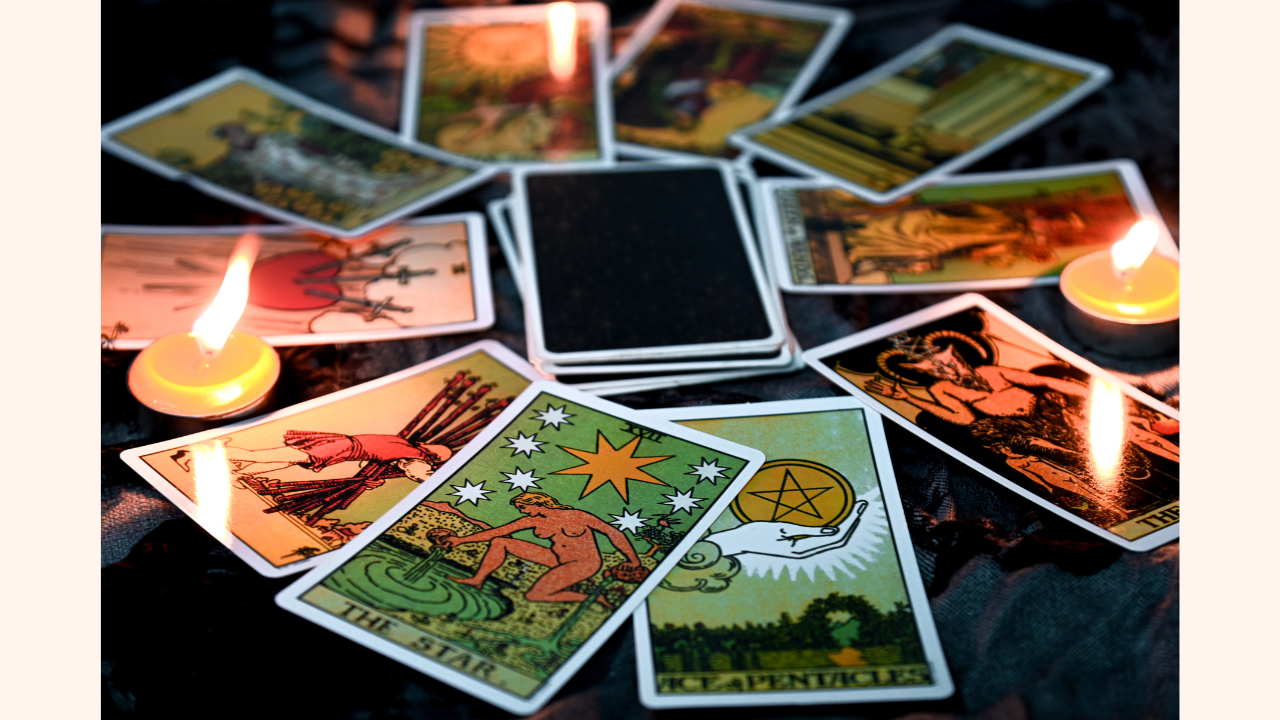
It's 2am.
You're in bed, phone inches from your face, watching a woman with ring-light eyes shuffle tarot cards on a velvet cloth. Maybe you found her on YouTube. Maybe she popped up on your TikTok For You page uninvited. Maybe Instagram served her up between a smoothie recipe and a gym transformation video.
"If you're seeing this video, it's not an accident," she says, looking directly into your soul (and your algorithm). "Spirit called you here."
You pause the video. You hover your hand over three piles of cards arranged on screen. You pick pile two. You feel a little flutter. What if this one is actually for me?
Forty-five minutes later, you've watched six more videos, it's almost 3am, you feel vaguely worse than when you started, and yet somehow you're already clicking on the next one.
Sound familiar?
Welcome to the New Psychic Addiction
I coined the term "Psychic Junkie" back in 2006 when I wrote my memoir Psychic Junkie (Simon & Schuster) — the first book to publicly address psychic addiction. Back then, the addiction looked like burning through online psychic phone or chat sessions for readings about whether your ex was coming back. Or endlessly stalking psychic reviews, searching for the Holy Grail — the one reader who would finally, actually be accurate.
Nearly twenty years later? Same pattern. New delivery system.
The "Pick a Card" tarot video — on YouTube, TikTok, Instagram Reels, take your pick — is the crystal ball of the digital age. And it's more powerful than its predecessor, for one simple reason:
It's free. It's infinite. And the algorithm never sleeps.
This Is Bigger Than You Think
Let me put some numbers on this so you know you're not alone — and also so you understand why this isn't just a quirky little habit.
#TarotReading has surpassed 12 billion views on TikTok alone. YouTube Pick-a-Card videos draw millions more. Instagram feeds double as curated altars of symbolism and readings served up between sponsored posts. The global tarot market is projected to hit $93 million by 2027.
That's not a niche. That's an industry — built largely on your anxiety.
And Gen Z in particular has folded tarot readings into daily life as a new coping tool. Studies consistently show that more than half of Gen Z report significant anxiety about their future, with uncertainty—especially around career and direction—ranked as a top concern. Many are turning to tarot or spiritual tools in search of reassurance and clarity about what comes next.
In other words: you're not turning to these videos because you're gullible or naïve. You're turning to them because you're human, you're uncertain, and you're looking for something to hold onto.
That part makes complete sense.
The part that doesn't? The loop.
The Loop (You Know the One)
Here's what the endless Reddit and Quora threads about tarot addiction all describe:
People start watching for comfort after a breakup, a job loss, a big decision. The videos feel warm and personal. Someone says "this is a message specifically for you" and something in you lights up. You feel a rush — like maybe the universe does have a plan, and maybe it's a good one, and maybe this stranger with the amethyst ring can see it.
That rush? That's dopamine. Real, neurological, feel-good dopamine — the same chemical your brain releases when you get a like on Instagram or win at a slot machine.
And just like a slot machine, the high doesn't last.
One woman on Quora described it this way: "I obsessively listened to general tarot readings from YouTube and feel that it ruined my life and my relationship." Another wrote: "Every time I feel depressed, I watch tarot readings on YouTube, and as soon as I finish watching I feel more depressed. How do I break that cycle?"
People report losing sleep. Becoming unproductive. Watching compulsively while feeling worse after each video than before — and clicking play again anyway.
I've heard this story before. Just with different props.
Why It's Actually Worse Than Old-School Psychic Addiction
When people are deep in psychic addiction, there is at least a financial brake on the compulsion. Eventually even the most devoted psychic junkie has to stop and ask: wait, how much have I spent this week?
YouTube, TikTok, and Instagram tarot videos have no such brake.
It's free. It's endless. It's been specifically engineered, like all social media, to exploit the dopamine system and keep you watching.
Add to that the "Pick a Card" format — which creates a powerful illusion of personalization — and you have something particularly insidious. Your brain knows it's a general reading made for thousands of people. But something deeper whispers: but what if it's really for me?
That whisper is the hook.
Same Wound, Different Era
Here's the thing I want you to really hear, especially if you're in your 20s and this phenomenon feels brand new to you:
The wound underneath this addiction is ancient.
It's the wound of not trusting yourself. Of feeling like the answers are out there somewhere — in the cards, in the algorithm, in the woman with the ring light — rather than in here, in you.
I know, I know. "Trust yourself" sounds basic, but bear with me.
I spent years outsourcing my inner knowing to strangers. Psychics who sold me fairy tales. Tarot Readers who kept me clinging to doomed relationships, endlessly waiting for the predicted “happy ending” to come true. The predictions almost never did materialize — and yet I kept going back.
What finally broke the loop wasn't willpower. It wasn't even realizing the predictions were wrong (though that helped). It was discovering that the accurate and reliable guidance I was desperately seeking unsuccessfully from everyone else — was available inside me all along. I'd just never been shown how to access it or trust it.
Here's the thing about that still, small voice within that knows — it isn't a show pony with cards and millions of followers. It only has one follower and is only going to give me guidance that is in my highest and greatest good. It’s not there to entertain- but to actually help me live my best life.
That discovery eventually led me to become a certified hypnotherapist and develop my Be Your Own Psychic protocol — because hypnosis turns out to be the simplest key I've ever found to that inner door.
So Is All Tarot Bad?
No, the tarot isn’t bad— and I want to be clear about that, because I'm not here to shame anyone or the cards! Although I was once hopelessly addicted to reading my own tarot cards, I now have a healthy occasional relationship with them. I love the Tarot!
Used as a journaling prompt or a moment of self-reflection, tarot can be a genuinely useful tool. Many Gen Z users describe using it exactly that way — as a mood check-in, not a prophecy. That's healthy. That's fine.
The question isn't really about tarot. It's about your relationship with it.
Are you using it to spark your own reflection? Or are you using it to outsource your thinking?
Are you watching one video and feeling grounded? Or are you three hours deep at 2am, feeling hollow, clicking play again?
Are the cards making you feel more capable and clear? Or more dependent and anxious?
You probably already know the answer. That's why you're here reading this.
The Way Out Is In
You are not broken. You are not weird. You are not weak for having fallen into this loop. You are someone whose intuitive gifts have been outsourced to an algorithm, and the way back is simply learning to come home to yourself.
Your Higher Self — the wisest, most loving, most knowing part of you has been there the whole time. You've just had a lot of noise drowning it out.
Here's What the Tarot Reader Actually Has Access To (Spoiler: So Do You)
Here's something that might reframe this whole thing for you.
When you feel like a tarot reading "resonates" — when something lands and you feel that little shiver of yes, that's it — what's actually happening? Where is that recognition coming from?
It's coming from you.
The reader is tapping into what many call the “collective” — a field of universal energy and information that people have been describing in different language for centuries. Your Higher Self is already connected to that same collective. Permanently. For free. No subscription required.
The psychic — or the tarot reader, or the algorithm — is essentially a middleman between you and your own inner knowing. And like all middlemen, they can deliver the wrong message, at the wrong time, to the wrong person.
What if you could direct message instead?
Because here's what a genuine connection to your own Higher Self offers that no YouTube channel ever can: guidance that is specifically and completely for you — not a general reading designed to resonate with thousands of people simultaneously. Not a prediction that spikes your anxiety and keeps you spiraling at 3am. Not a fairy tale designed to keep you clicking.
Your own Higher Self will tell you the truth. Gently, lovingly, but honestly. It will never string you along. It will never tell you what you want to hear at the expense of what you need to hear. And the guidance it offers is always — always — in your highest and greatest good.
Ready to Try It?
If something in this post is resonating — if part of you is thinking okay, but how do I actually access that inner guidance — here's the beautiful secret:
You can start right now. Literally right now.
Take a breath. Close your eyes. Turn within. And ask directly — your Higher Self, your Guides, whatever feels right to you. Ask your question out loud or silently inside your mind. Then notice what comes. A feeling. A knowing. A thought that seems to arrive from somewhere a little deeper than the usual mental chatter of your monkey mind.
That's it. That's the whole thing. You just need a moment of stillness and the willingness to trust what comes.
Now — I know what you might be thinking. Easier said than done. And honestly? You're not wrong. When your mind has been trained to reach for the next video the moment uncertainty creeps in, finding that quiet mind space can feel like trying to hear a whisper at Coachella.
Here’s a tip: The best times to try this is when you first wake up in the morning and when you’re drifting off to sleep.
If you need support with this process and want to be walked through it, I offer an online hypnosis mini-course called The Inner Oracle Protocol. It’s designed to help you reconnect with your own inner guidance- the part of you that knows.
And if you’re deeper in the loop—if it’s affecting sleep, relationships, or decision-making—you may benefit from a more personalized hypnotherapy session Psychic Junkie Rx, designed specifically to interrupt the compulsive cycle and restore internal authority.
The guidance you've been searching for in every tarot card pile, every "If you're seeing this- it's a Sign" video, every 2am algorithm rabbit hole?
It’s in you. It’s always been in you.
🧡 Sarah
Feeling overwhelmed, stuck in your head, or searching for answers?Try my free 12-minute guided hypnosis, Calm Your Mind & Find Clarity.
Sarah Lassez is a certified hypnotherapist (CHt), the author of Psychic Junkie (Simon & Schuster), and creator of The Inner Oracle Protocol. She has been helping people break psychic addiction and reconnect with their own inner guidance for decades. Learn more at happyhearthypnosis.com